
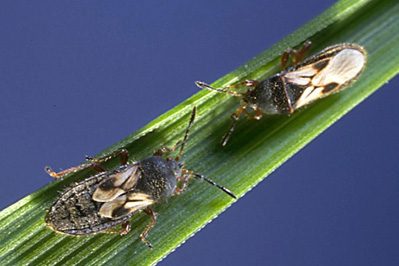
Chinch Bugs in Alabama Lawns: Identification, Treatment, and Prevention
If your Alabama lawn develops irregular patches of yellowing or straw-colored grass during the hottest weeks of summer — and those patches keep spreading despite regular watering — chinch bugs may be the cause. These tiny insects are one of the most damaging lawn pests across the South, and Alabama’s warm, dry summers create exactly the conditions they thrive in. Mighty Green helps Alabama homeowners identify and eliminate chinch bug infestations before they take over.
What Are Chinch Bugs?
Chinch bugs (Blissus insularis) are small insects — adults reach only about 1/5 of an inch — that feed on turfgrass by piercing grass blades and extracting plant fluids while injecting a toxic compound that blocks water movement in the grass. The result is grass that wilts, yellows, and dies even when moisture is present. In Alabama, the southern chinch bug is the primary species, and St. Augustine grass is its preferred host.
Identifying a Chinch Bug Infestation
Chinch bug damage is often mistaken for drought stress because the symptoms look similar — yellowing grass that turns brown and dies. The key differences:
- Damage appears in hot, sunny areas of the lawn first — along driveways, sidewalks, and south-facing slopes
- Grass doesn’t recover with irrigation — the toxin prevents normal water uptake regardless of soil moisture
- Patches expand outward continuously during summer heat
To confirm chinch bugs, try the flotation test: remove both ends of a large tin can, push it 2–3 inches into the soil at the edge of a damaged patch, fill with water, and wait 5 minutes. Chinch bugs will float to the surface. Finding 15–20 per square foot indicates an infestation that warrants treatment.
Peak Season in Alabama
In Alabama, chinch bugs are most active and damaging from June through September, with peak pressure in July and August when temperatures are highest and lawns are under drought stress. They overwinter as adults in thatch and leaf litter, emerging in spring to begin feeding. Two or more generations can occur per season in the Alabama climate.
Treatment Options
Once a chinch bug infestation is confirmed, insecticide application is necessary. Effective options include:
- Bifenthrin, carbaryl, and lambda-cyhalothrin are commonly used contact insecticides that provide fast knockdown
- Apply in the early morning or evening when temperatures are lower and chinch bugs are active near the surface
- Water lightly before treatment to bring bugs closer to the surface, then avoid irrigation for 24 hours after application
- Retreatment may be needed after 2–3 weeks if populations persist
Be aware that some chinch bug populations in the Southeast have developed resistance to pyrethroid insecticides. If a first treatment shows limited results, switching to a product with a different mode of action is recommended.
Prevention and Cultural Control
Reducing the conditions that favor chinch bugs keeps pressure low throughout the season:
- Dethatch annually — thick thatch provides ideal harborage for overwintering adults
- Avoid excessive nitrogen in summer, which produces lush growth that attracts chinch bugs
- Water deeply and infrequently to reduce drought stress, which amplifies damage
- Consider chinch-bug-resistant St. Augustine varieties like Floratam for lawn renovation in heavily affected areas
Mighty Green: Protecting Alabama Lawns from Chinch Bugs
Chinch bug damage spreads fast — what starts as a small patch in June can take out a significant portion of your lawn by August. Mighty Green’s summer lawn care programs include monitoring for early signs of chinch bug activity and targeted insecticide applications timed to Alabama’s pest pressure calendar. Contact Mighty Green today to keep your lawn protected all season long.