

Signs of Armyworm Damage in Your Lawn and How to Fight Back Against an Infestation
You love your lawn, but are you ready to go to battle for it? You might have to if you have an armyworm infestation. Armyworms are common lawn pests in Alabama and many other parts of the U.S., but they aren’t worms at all. We’re covering how to spot armyworm damage in your Birmingham lawn and wage war before it’s too late to stop the invasion.
Understanding What Armyworms Are
The name “armyworms” refers to a group of moth larvae across several related species. While the adult moths aren’t directly harmful to plant life and vegetation, they do lay many eggs during their lifecycle. These eggs hatch and grow into the larval stage of armyworms, named rightly so because they are often seen “marching” in organized troops. Adult armyworms undergo a pupae stage and emerge as various types of moths, which then go on to lay eggs in large numbers, increasing armyworm populations.
Armyworms are usually around 1.5-2 inches long in the larvae stage, and while colors can vary, they usually have notable vertical stripes on their body. Most also have an inverted or upside-down “Y” on their heads. Armyworms can attack at different times throughout the year. True armyworms are typically more of an early summer pest, but fall armyworms (spodoptera frugiperda) are most prevalent during the late summer and autumn months.
Common Signs of Armyworm Damage
It’s typically easy to identify armyworms if you spot them in person. But if you haven’t seen actual armyworms in your yard, there are certain signs of an infestation to be aware of so you can know if you have a problem.
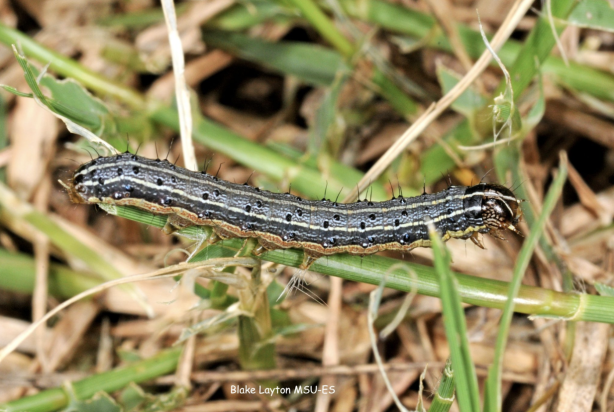
Armyworm; Source
Patterned Bites in Leaves
If you have plants with broad leaves in your landscaping, you may start to notice distinctive holes or bites in ordered rows. These patterned bites are indicative of the way armyworms attack leaves, leaving rows of damage behind.
Brown Lawn Patches
If you notice a handful of small brown patches in your turfgrass, you might be dealing with armyworms. Armyworms move methodically but quickly, so you might see a lot of damage and defoliation in a very short amount of time. If you notice a brown patch or two, and then notice additional patches popping up in a line or row, armyworms are the likely culprit.
Transparent Grass Blades
Armyworms may often eat the entire blade of grass, leaving bald spots in your lawn. However, they are also known to eat only one layer (the green part) of the grass blades. When this happens, it creates transparent spots on the blade, which give it a windowpane effect. If you see this on your grass, it’s very likely you’re dealing with armyworms.
Increased Signs of Birds and Rodents
Birds like starlings, and common rodents like skunks, raccoons, and possums all consume armyworms. Since they’re a favorite treat, if you’ve got an armyworm invasion, you may start noticing signs of damage from these predators. Birds and mammals alike will peck and dig at the soil to get to these grubs, leaving torn-up dirt and destruction behind.
How to Confirm Armyworm Damage
If you suspect you have an infestation of armyworms, you’ll want to take action right away. While the adult armyworm moths won’t harm your plants or your lawn, they will lay eggs that will continue the destructive cycle. Start by inspecting your grass and landscape plants, looking for the signs listed above. You can also dig up patches of your soil to look for the caterpillars or do a sweep across the top of your grass with an insect net. If you do this, aim for early morning, when armyworms are most active. If you still aren’t sure, it might be time to call in a professional and get their insight and advice.
Treating Armyworm Infestations
Understanding how to deal with armyworms is part of knowing how to control lawn grubs of all sorts. Prevention is the ideal, but that isn’t always the reality. In most cases, it starts with accurate identification, and then there are numerous steps you can take from there.
Apply Insecticides at the Right Time
There are many insecticides that are effective in ridding your lawn of armyworms. However, timing is absolutely critical. Since armyworms are most active in the early morning hours, you’ll get the most out of your insecticide by treating them at this time. It also helps to pay attention to the climate you’re in, and how that impacts the timing and life cycle of the armyworm larvae in your yard. Warmer weather might mean armyworm eggs hatch later, which impacts when you should treat the lawn.
Choose the Best Insecticide
There are many ways to apply insecticide to your lawn, including granules distributed by a lawn spreader, or sprays that are typically attached to a garden hose. Pesticide sprays and concentrates kill on contact, but granules may last longer to prevent recurrences. Look for pesticides with pyrethroids as an active ingredient, but pay careful attention because they may be more effective on smaller, younger armyworm caterpillars.
Understand the Armyworm Life Cycle
Most fall armyworms have six instars. However, the actual life cycle span at this stage is relatively short, from 10-20 days in most cases, or up to 30 days in cool weather. Unfortunately, armyworm larvae can do an extraordinary amount of damage in this short time. It’s important that you identify and take action against armyworms while they are still in the larvae stage. You can also look at the armyworms in your yard and inspect them for any small white growths near the head. If these are spotted, it typically indicates they’ve been targeted by a parasitic fly, and will soon die.
Try a DIY Approach to Armyworm Outbreaks
There are some natural measures you can try if you want to get rid of the armyworms in your yard. Neem oil mixed with water has been shown to help with some armyworm infestations, as has dish soap mixed with water. You can try to spray these mixes on your yard and take careful note of whether that stops the damage. You can also manually rid your yard of armyworms by picking them off grass blades and dropping them into a bucket of soapy water. While effective, this method is time-consuming and not recommended for large infestations. If they don’t work, you can risk losing your lush, healthy lawn in the battle. Ultimately, these DIY methods can only get you so far, so you might find it saves time and headaches to explore pest control services in Birmingham.
How Professional Lawn Care Can Help Protect Your Lawn from Armyworms
Armyworms can be devastating to your lawn, but fortunately, they can be controlled. However, it often requires support from a professional lawn care service in Birmingham. At Mighty Green Lawn Care, our experts know exactly how to identify an armyworm problem, and they are armed and ready to go to battle for the sake of your lawn. Contact us to learn about pest control and total lawn care services in Birmingham.